Moneysupermarket
Online forms the right way
User research
UX patterns
Validation / iteration
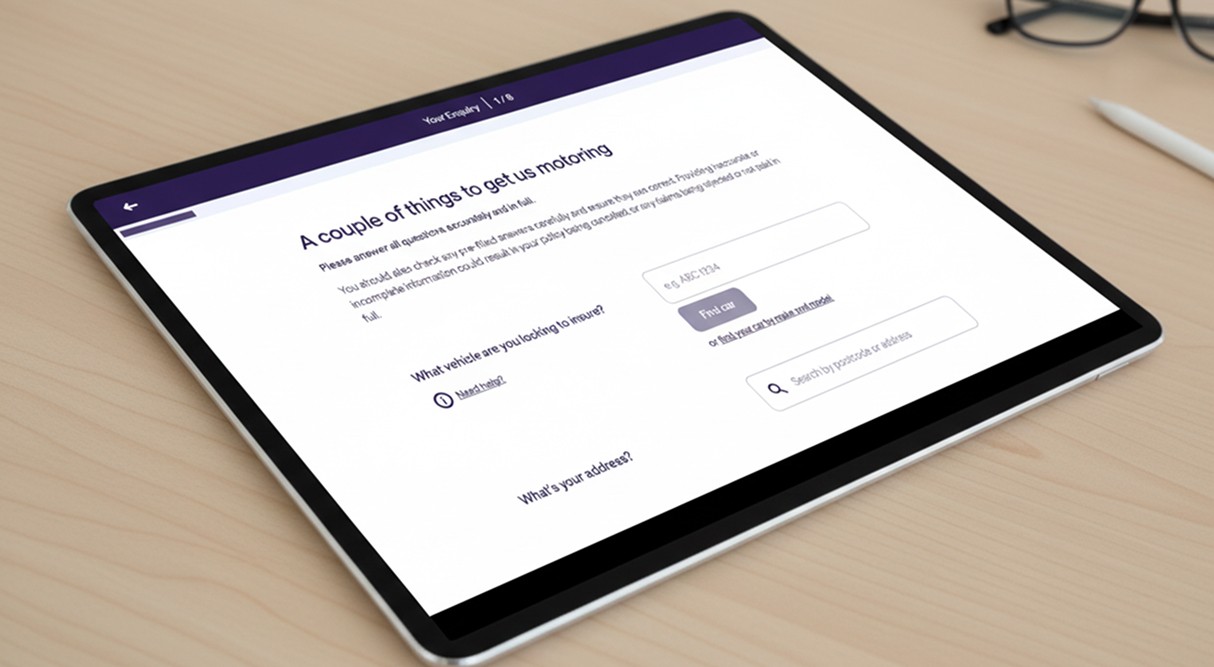
The problem
Poor question set conversion rate
within comparison journeys
Usability issues
for certain user types
The solution
Identify customer expectations
across different products
Question set patterns
tailored to each comparison journey
What did the data say?
We discovered that different comparison journeys had very different conversion rates, even when their complexity was similar. Ongoing optimisation and usability testing also showed that different user types responded to these journeys in very different ways.
Connecting these insights, we launched a new initiative focused on improving question-set conversion rates across all comparison journeys.
The first step was a research audit, reviewing existing research data and screen recordings. While the process was manual and time-consuming, it gave us clear direction on where to focus our efforts.
We were falling short in three key areas, making it clear we needed to go back to the drawing board to better serve our diverse users.
Inclusivity
Stop focusing only on the majority. Consider the diverse range of customers using our services.
Product diversity
The ‘one size fits all‘ approach for our different question sets is far from optimal.
User expectations
Customers have different expectations in each stage of the journey.

To tackle these challenges, I began experimenting with different question-set patterns, each built around a core UX principle. I explored different ways to present questions to users with different needs and confidence levels.
To tackle these challenges, I began experimenting with different question-set patterns, each built around a core UX principle. I explored different ways to present questions to users with different needs and confidence levels.
Question set patterns
Clarity
This pattern only showed a few questions at a time compared to long question forms.
Works well for:
Personal details
Sensitive questions
Questions require focus
Control
This pattern would give quicker completion time and a better sense of progression
Works well for:
Generic questions
Yes/No questions
Easy questions
Summary
This pattern is to help users double check and evaluate their answers before proceeding.
Works well for:
Summary pages
Confirm answers
Yearly renewals
Clarity
This pattern only showed a few questions at a time compared to long question forms.
Works well for:
Personal details
Sensitive questions
Questions require focus
Control
This pattern would give quicker completion time and a better sense of progression
Works well for:
Generic questions
Yes/No questions
Easy questions
Summary
This pattern is to help users double check and evaluate their answers before proceeding.
Works well for:
Summary pages
Confirm answers
Yearly renewals
Clarity
This pattern only showed a few questions at a time compared to long question forms.
Works well for:
Personal details
Sensitive questions
Questions require focus
Control
This pattern would give quicker completion time and a better sense of progression
Works well for:
Generic questions
Yes/No questions
Easy questions
Summary
This pattern is to help users double check and evaluate their answers before proceeding.
Works well for:
Summary pages
Confirm answers
Yearly renewals
Clarity
This pattern only showed a few questions at a time compared to long question forms.
Works well for:
Personal details
Sensitive questions
Questions require focus
Control
This pattern would give quicker completion time and a better sense of progression
Works well for:
Generic questions
Yes/No questions
Easy questions
Summary
This pattern is to help users double check and evaluate their answers before proceeding.
Works well for:
Summary pages
Confirm answers
Yearly renewals
Clarity
This pattern only showed a few questions at a time compared to long question forms.
Works well for:
Personal details
Sensitive questions
Questions require focus
Control
This pattern would give quicker completion time and a better sense of progression
Works well for:
Generic questions
Yes/No questions
Easy questions
Summary
This pattern is to help users double check and evaluate their answers before proceeding.
Works well for:
Summary pages
Confirm answers
Yearly renewals
Clarity
This pattern only showed a few questions at a time compared to long question forms.
Works well for:
Personal details
Sensitive questions
Questions require focus
Control
This pattern would give quicker completion time and a better sense of progression
Works well for:
Generic questions
Yes/No questions
Easy questions
Summary
This pattern is to help users double check and evaluate their answers before proceeding.
Works well for:
Summary pages
Confirm answers
Yearly renewals
Clarity
This pattern only showed a few questions at a time compared to long question forms.
Works well for:
Personal details
Sensitive questions
Questions require focus
Control
This pattern would give quicker completion time and a better sense of progression
Works well for:
Generic questions
Yes/No questions
Easy questions
Summary
This pattern is to help users double check and evaluate their answers before proceeding.
Works well for:
Summary pages
Confirm answers
Yearly renewals
Clarity
This pattern only showed a few questions at a time compared to long question forms.
Works well for:
Personal details
Sensitive questions
Questions require focus
Control
This pattern would give quicker completion time and a better sense of progression
Works well for:
Generic questions
Yes/No questions
Easy questions
Summary
This pattern is to help users double check and evaluate their answers before proceeding.
Works well for:
Summary pages
Confirm answers
Yearly renewals
To validate our assumptions and gather early feedback, we built prototypes that simulated question sets across different comparison journeys.
Usability testing showed that it wasn’t just about choosing the right pattern for each product. Each journey also needed to be segmented with the right mix of patterns applied at the right moments to truly work for users.
Question set spaces
Based on user feedback, we introduced distinct journey spaces within the question sets. Each space had its own characteristics and drew on different core principles from the question-set patterns. The balance of these spaces varied by journey, depending on the product and specific customer expectations.
Emotional space
The emotional space gives increased focus and also a sense of calmness.
Primary pattern:
Clarity
Functional space
This space is to take action, make progression, but still remain in control.
Primary pattern:
Control
Transitional space
Giving customers a clear summary of their answers, with simple, obvious ways to amend them if needed.
Primary pattern:
Summary pages
Emotional space
The emotional space gives increased focus and also a sense of calmness.
Primary pattern:
Clarity
Functional space
This space is to take action, make progression, but still remain in control.
Primary pattern:
Control
Transitional space
Giving customers a clear summary of their answers, with simple, obvious ways to amend them if needed.
Primary pattern:
Summary pages
Emotional space
The emotional space gives increased focus and also a sense of calmness.
Primary pattern:
Clarity
Functional space
This space is to take action, make progression, but still remain in control.
Primary pattern:
Control
Transitional space
Giving customers a clear summary of their answers, with simple, obvious ways to amend them if needed.
Primary pattern:
Summary pages
Emotional space
The emotional space gives increased focus and also a sense of calmness.
Primary pattern:
Clarity
Functional space
This space is to take action, make progression, but still remain in control.
Primary pattern:
Control
Transitional space
Giving customers a clear summary of their answers, with simple, obvious ways to amend them if needed.
Primary pattern:
Summary pages
Emotional space
The emotional space gives increased focus and also a sense of calmness.
Primary pattern:
Clarity
Functional space
This space is to take action, make progression, but still remain in control.
Primary pattern:
Control
Transitional space
Giving customers a clear summary of their answers, with simple, obvious ways to amend them if needed.
Primary pattern:
Summary pages
Emotional space
The emotional space gives increased focus and also a sense of calmness.
Primary pattern:
Clarity
Functional space
This space is to take action, make progression, but still remain in control.
Primary pattern:
Control
Transitional space
Giving customers a clear summary of their answers, with simple, obvious ways to amend them if needed.
Primary pattern:
Summary pages
Emotional space
The emotional space gives increased focus and also a sense of calmness.
Primary pattern:
Clarity
Functional space
This space is to take action, make progression, but still remain in control.
Primary pattern:
Control
Transitional space
Giving customers a clear summary of their answers, with simple, obvious ways to amend them if needed.
Primary pattern:
Summary pages
Emotional space
The emotional space gives increased focus and also a sense of calmness.
Primary pattern:
Clarity
Functional space
This space is to take action, make progression, but still remain in control.
Primary pattern:
Control
Transitional space
Giving customers a clear summary of their answers, with simple, obvious ways to amend them if needed.
Primary pattern:
Summary pages
Learn, test, iterate - repeat
We A/B tested these patterns across money products such as mortgages, credit cards, and loans. The gains were gradual but consistently positive. It took multiple rounds of testing to find the right mix of patterns, but the result was steady growth in question-set conversion and fewer drop-offs.
While progress took longer than expected, the focus was on building a robust optimisation strategy, not chasing quick wins. In the long run, that approach delivered lasting results.
Project summary
up to
Conversion rate
up to
Drop-off rate
Introducing journey spaces and a more flexible use of question-set patterns led to conversion uplifts across insurance products, including car, home, travel, and life.
Customers were more engaged and focused on the fields that mattered most. Beyond short-term KPIs, these changes also improved long-term metrics such as customer loyalty and NPS.